
After Historic Progress, Alaska’s HB 78 Fight Is Not Over
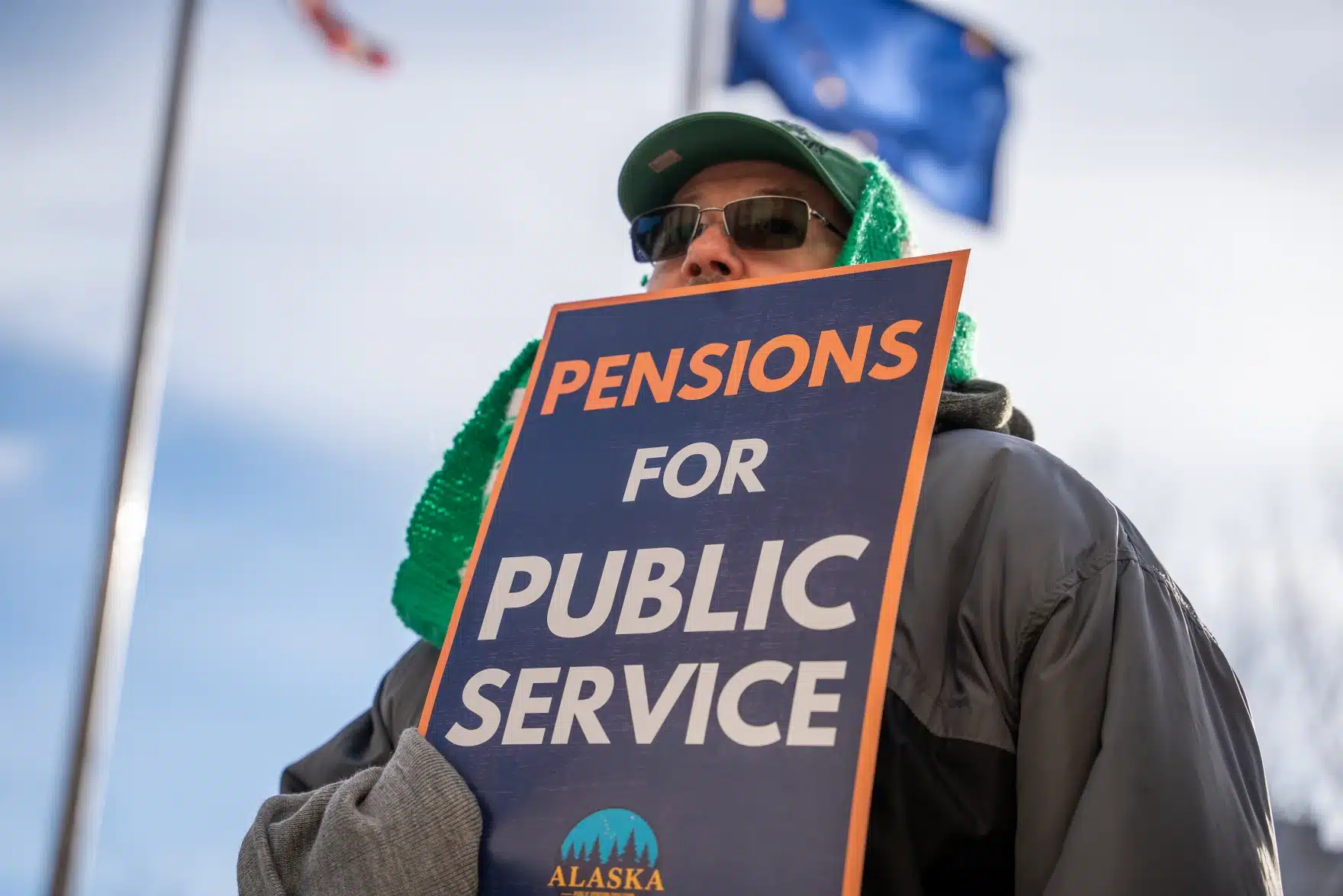
For the first time since Alaska closed its defined benefit pension system nearly two decades ago, a bill to restore pensions for public employees cleared both chambers of the Legislature and landed on the Governor’s desk. House Bill 78 represented historic progress for Alaska’s teachers, first responders, snowplow drivers, public safety officers, municipal workers, and state employees who have spent years calling for a retirement system that helps keep experienced public servants in Alaska.
But today, HB 78’s path forward has been halted. Gov. Mike Dunleavy vetoed the bill on May 18, 2026, and the Legislature failed to override that veto the following day in a 33-27 vote–forty votes were needed to override. As a result, Alaska’s public workers will remain under the state’s current 401(k)-style defined contribution system–for now.
While that outcome is disappointing, it should not obscure the success in what happened this year: HB 78 advanced further than any pension restoration bill since Alaska eliminated pensions for new public employees in 2006. It passed the Senate 12-8, the House concurred with Senate changes, and was delivered to the Governor on April 30. The Governor’s veto is the end of the fight. It is proof that the movement to restore retirement security in Alaska has gained significant momentum.
Where HB 78 Stands Today
HB 78’s official status is now “veto sustained,” according to the Alaska Legislature’s bill record. The bill would have allowed certain public employees and teachers to choose between the current defined contribution plan and the new defined benefit pension option.
The Senate version amendments included a shared-risk retirement tier, employee choice, employer choice for non-state PERS employers, adjustable contribution mechanisms, health reimbursement accounts, post-retirement pension adjustments, and death and disability benefits. Supporters argued that the plan was built with fiscal safeguards to avoid past mistakes while giving Alaska a tool to recruit and retain public workers.
The weight of the situation was succinctly captured by Sen. Cathy Giessel, a primary architect of the Senate effort, who noted that Alaska stands alone in its lack of retirement security: “Every other state offers a pension for at least some of their public servants. We do not, and we are seeing the results.”
The stakes are even higher because many Alaska public employees also do not participate in Social Security. That means the current defined contribution system is not simply replacing a pension—for many workers, it is their primary source of retirement security. Without a defined benefit pension or Social Security, Alaska is asking public employees to build careers in public service without the basic retirement foundation available to most workers across the country.
How Alaska Got Here: The Actuary Issue and the HB 78 Fix
Alaska’s pension debate is shaped by history. In 2006, the state closed its defined benefit pension plans to new public employees after earlier actuarial errors had contributed to significant underfunding. That decision shifted new workers into a defined contribution system, but it did not solve Alaska’s workforce challenges. Instead, Alaska became an outlier: a state that asks many public employees to build careers in difficult conditions without the same pension security available in nearly every other state.
Supporters of HB 78 did not ignore that history; they addressed it directly. Legislative hearings included extensive discussion of actuarial assumptions, unfunded liabilities, employer contribution caps, and established a precedent of using three separate actuaries to avoid repeating earlier mistakes.
The key point is that HB 78 was not an attempt to simply reopen the old system. It was designed as a new shared-risk model with guardrails. The plan was structured to begin fully funded, adjust contributions if needed, and include mechanisms to keep the plan stable over time. During the debate, supporters emphasized that the bill was built differently from the legacy system and incorporated lessons from the past. Alaska Public Media reported that the reworked plan “begins fully funded” and includes mechanisms to adjust contributions up and down to maintain funding.
In other words, the fix was not to deny actuarial risk. The fix was to build a pension plan that accounts for it.
Alaska’s Workforce Crisis Has Only Grown
HB 78 advanced because lawmakers, public employees, and communities across Alaska have seen firsthand the consequences of the current system. Alaska is struggling to recruit and retain the workers who keep communities running.
In previous This Week in Pensions coverage, we have noted that Alaska’s retirement system is directly tied to workforce instability, especially for teachers, first responders, and state employees. Alaska has continued to lose experienced workers to states that offer stronger retirement benefits. Teachers have described leaving Alaska for Washington and other states to build a more secure future. Public employees have warned that the current system makes Alaska a “stepping stone” rather than a place to build a career.
The numbers reinforce those stories. In 2025, Sen. Giessel’s newsletter cited a 17% vacancy rate in state government and noted that premium pay costs had climbed from $84 million in 2020 to $133 million in 2025, with $677.5 million spent over six years on premium pay tied to low salaries and retention challenges. That figure did not include overtime and hiring bonuses.
Public-sector advocates have also pointed to nearly 16%, or about 3,000, vacant public service jobs across Alaska. Teacher turnover remains a major concern as well. NEA-Alaska notes that Alaska’s educator turnover is among the worst in the country, with a 2021 Institute of Education Sciences study finding teacher turnover at 22%, and rural Alaska turnover as high as 31%.
These are not abstract numbers. They show up when a classroom cannot keep an experienced teacher, when emergency response is stretched thin, when state agencies face backlogs, and when communities lose the workers who understand local needs.
Workers and Coalition Advocates Kept HB 78 Moving
HB 78’s progress did not happen on its own. It was the result of years of organizing by public employees, retirees, unions, local leaders, and the Alaska Public Pension Coalition (APPC).
Throughout the process, workers shared their personal experiences, wrote letters, met with lawmakers, and argued that retirement security is not just an issue of benefits; it is a matter of public services. The record for Alaska Legislature’s HB 78 includes extensive public testimony, letters of support, workforce data, materials on teacher recruitment and retention, as well as presentations from pension experts and advocates, such as Teresa Ghilarducci.
APPC’s message has remained consistent: Alaska cannot solve its recruitment and retention crisis without offering a competitive retirement benefit. Public workers are not asking for something extravagant. They are asking for the ability to build a stable career and retire with dignity in the communities they serve.
As House Majority Leader Rep. Chuck Kopp said after HB 78 passed the Senate and House concurrence vote, “HB 78 is a workforce stability bill.” He added that employers are working hard to hire and train workers, only to lose them to jobs in the Lower 48.
HB 78’s Movement Through the Legislature
HB 78 was introduced in 2025 by Rep. Kopp, and was sponsored by the House Finance Committee. The House passed the bill in May 2025 by a narrow 21-19 vote, sending it to the Senate.
Legislative records from Alaska indicate a series of committee sessions held between January and April 2026. During this time, HB 78 progressed from the Senate Labor & Commerce Committee to the Senate Finance Committee, where members examined the proposal’s fiscal impact, employer contribution requirements, actuarial modeling, and overall framework. Specific Senate Finance deliberations occurred on March 11, March 12, March 26, April 9, April 16, and April 24.
The Senate made several changes before passage. One key amendment reduced the contribution rate for local governments and other non-state employers from 24% to 22.5%, after many local governments raised affordability concerns. Non-state employers would also have had the ability to opt out and remain in the defined contribution plan.
On April 28, 2026, the Senate passed HB 78 by a 12-8 vote. The next day, the House concurred with the Senate’s changes, sending the bill to Gov. Dunleavy.
The Alaska LNG Pipeline Deal and the Veto
The final stages of HB 78 became inextricably linked to a separate political dispute regarding the proposed Alaska LNG pipeline. According to reports from the Alaska Beacon and Alaska Public Media, a potential compromise was discussed in which the Governor would allow HB 78 to become law in exchange for the Legislature passing tax relief for the gas pipeline.
Ultimately, this arrangement collapsed. Despite extensive House debate on pipeline legislation, the gas line bill failed to progress, leading Governor Dunleavy to veto HB 78 before the constitutional deadline. In his veto message, the Governor maintained that any legislative effort to expand long-term state spending must be accompanied by support for long-term revenue sources.
This outcome is deeply frustrating for public employees, as a measure focused on workforce stability and retirement security was sacrificed to unrelated pipeline negotiations. Although the veto halted the bill, it did not diminish the coalition, years of testimony, or the underlying workforce crisis that successfully carried HB 78 through both chambers on its own merits.
Looking Forward
Although HB 78 did not pass into law this year, the significant strides made during the session remain meaningful.
For the first time in nearly two decades, Alaska’s public workforce reached the threshold of reclaiming a defined benefit pension. The legislation successfully cleared both the House and Senate, following rigorous debate that established a refined shared-risk model. This progress was driven by a powerful coalition and extensive public testimony that made the critical need for retirement security impossible for lawmakers to overlook.
The underlying crisis persists. Alaska continues to struggle with elevated vacancy rates and the high cost of employee turnover, hindered by a retirement framework that lacks competitiveness with other states. Public employees, including educators and first responders, are currently forced to decide if they can sustain careers in a state that lacks long-term security, while communities suffer the consequences of losing their most experienced professionals.
While the veto of HB 78 represents a temporary obstacle, it has not halted the momentum. The movement to restore pensions is now more robust than at the start of the session, carrying a definitive message: a stable public workforce requires stable retirement benefits.
Public servants have fulfilled their obligations; it is now up to the state to continue developing a retirement system that respects their dedication, fortifies local communities, and incentivizes workers to remain in Alaska. For many Alaska public workers, the fight for a pension is also a fight for any reliable source of retirement income. Without Social Security and without a defined benefit pension, too many workers are left to shoulder retirement risk on their own.